The yarn that I mentioned last week arrived safely, two big skeins of it. Lovely tonal reds.


I knit, a LOT. I read, a lot. I love cats. I love hockey, especially my no-longer-local team, the Boston Bruins. Want more? Read on.
The yarn that I mentioned last week arrived safely, two big skeins of it. Lovely tonal reds.
Half dozen more movie ratings from the Boston Globe! Shall we?
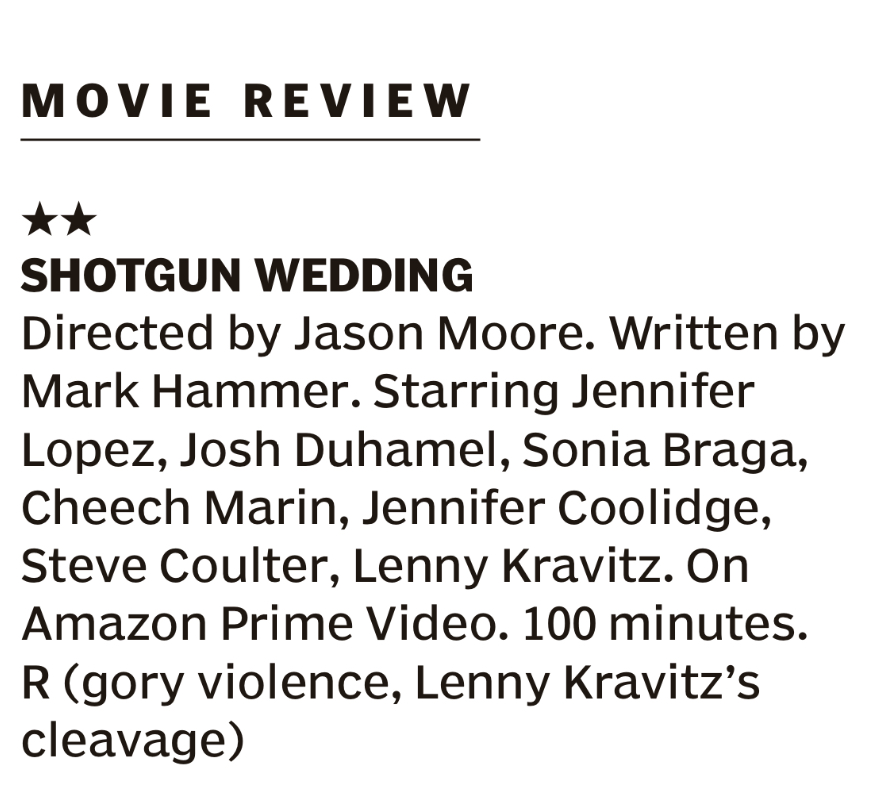


I couldn't even tell you the last movie I went to, but these things are just so fun.
Those of you with pets, do you think that they understand what you say?
I don't just mean by tone of voice: Maggie knows that "you're so cute" and "hello, baby girl" are good things, but I could say (and in fact have said) "you are such a pain in the ass" in the same tone and she wouldn't know the difference. I'm talking about actual words, like walk or treat, or even more complex ideas.
I was thinking about it recently when she once again proved that she knows what I mean when, as she hesitates to eat the remaining food in the bowl, I tell her, "You eat this and then I'll give you more." She almost always will eat what's there, but if I don't immediately take the bowl to get her more, I will see her in the kitchen by the food, looking reproachful. "You said!"
There was a column in the Boston Globe Sunday that touched on this in the context of family code words, and I was most amused by these:
"...my wife and I started referring to them as certain individuals, as in, ‘Is it time for certain individuals to take their evening meal?’ They have cracked all the codes for walks, car trips, etc., and they can spell T-R-E-A-T-S. But one phrase they have never been able to get is certain individuals, and so that has become the established code in our house for the dogs."
“In a house with two active dogs, you cannot say ‘walk the dog’ without causing immediate chaos. So we switch to things dogs are less likely to glom on to, like perambulate the pup. ‘Hey, I’m home! Do the pups need perambulating?’”
Maggie definitely knows some phrases. "Tuck a kitty in a blanket" is one, and specifically for my mother's bed, she knows "blue blanket." (She really likes sleeping in the blue blanket; it seems ordinary to us, but clearly we know nothing.)
The other category has to do with her preference to be the one deciding where to snuggle in: she hates to think that she's following our suggestions. So she'll jump on my bed and hesitate when I lift a blanket for her to go under. But if I say things like "Where would you like to go?" or "It's up to you" or "It's your call," nine times out of ten she heads right under. Just so we're clear who decided.
She also understands the meaning of "no," but does not see how that applies to her. Ever.

Mom and I ran into Walmart for a few things on Saturday, and when I touched a blanket on a clearance display, I told her she had to touch it. She did, and told me to pick a color, so for $8 we brought home a very soft blanket (to a home that is full of soft blankets, I know, shut up).
So, if you need to see something relaxing, watch Maggie embrace the blanket, Saturday night and Sunday and through to Monday morning.


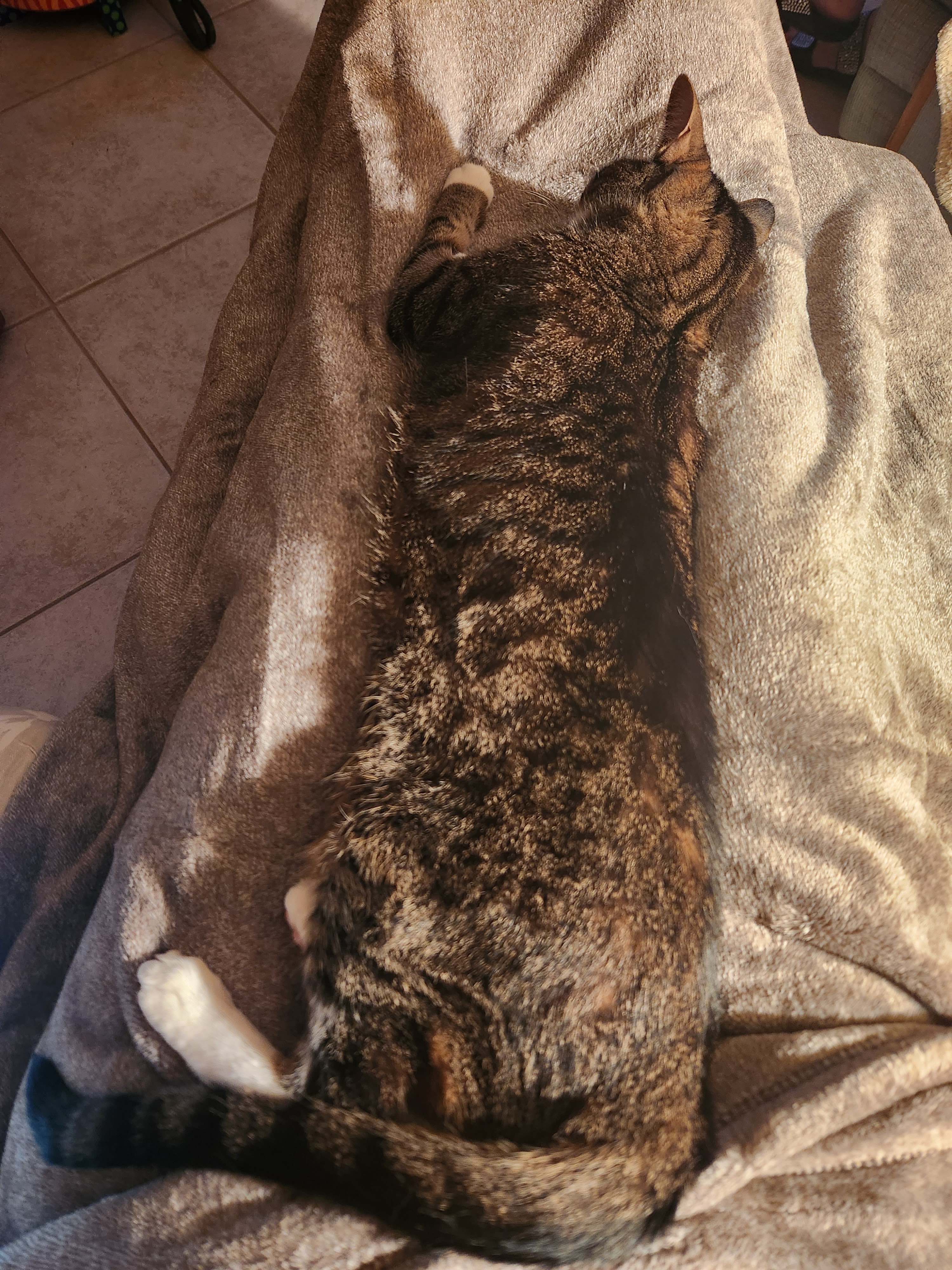


Yes, that lump is her as well. It's a hard life.


I know I said that I wasn't planning to buy any more yarn for a while, but I kind of did get a little. Kind of?
I was sitting on the lanai Friday, and wearing my Top Notes Poncho, which I made two years ago, and which is a really nice piece for when it's a little chilly around the edges, and the yarn I used for it is the sadly disappeared Maple Creek Farm Fredericksburg, which is BFL, lovely, light but warm.
I was thinking about what nice yarn it is, and the next thing I knew, I was looking in stashes on Ravelry, and found someone with two skeins to sell, in the Cherry Slush colorway that was the first of theirs I bought, back in 2010 (2010!) (I made a Frost Diamonds shawl with it, still have and wear that). And, well, isn't it amazing what you can do with an iPad*, sitting with a cat on your lap?
*I did wait to get to the actual computer to do the PayPal part.
I'm thinking of trying the Comodo cardigan, which says you can use any weight yarn. The Fredericksburg is listed in Ravelry as worsted weight, but I don't know. It's so light. I mean, the Springvale DK from Three Irish Girls is DK, as the name says, but the Wheelwright Shawl I used it in is so much heavier. Which is just a difference, not a complaint, but it points to one of the (forgive the pun) fuzzy parts about yarn weights.
Springvale DK is 100 grams to 270 yards
Fredericksburg (supposedly worsted) is 226 grams to 660 yards, which makes it 100 grams to ~265.5 yarns
And yet they feel so different! Mysterious.
I used needle sizes 11 and 10.5 (US) for the projects I've made, and I think I'll go down a little, to cut down on the pilling, maybe 9, maybe even just 10. See how the fabric turns out.
Think, think, think. Fun knitting thoughts.
Last month, I did what knitters often do when a friend has a crisis, and started knitting for her.
Yarn: Purple Lamb Sparkly Merino, in the colorway Beautiful Universe; it's fingering yarn, so I held it doubled.


It took 10 days, I'm happy with how it turned out, and my friend liked it, so I call that a total win.
On Sunday, it's time for the semi-annual exercise in ridiculousness that is daylight saving time. I hate it when the time changes, both ways, but I always have more trouble adjusting to the springing forward, which messes with my sleep intolerably. I so, so wish the government would just pick a time and leave it.
Even those who claim to be for it seem to fall into arguments about which time to choose, and dudes? I don't care. You can't please everyone. Just pick one. Tell me it's midnight when the sun is out, I don't care. Please stop yanking me around every year.

This morning started with minor annoyances:
Sigh. Nothing major, just a string of small annoyances. However, the good news, beyond the fact that my annual skin check showed nothing worrying, was in the Informed Delivery email from the USPS, saying that I had a package out for delivery today. From St Martins Press.
Guess what? I won a Goodreads giveaway.

Ahhhhhh! New Martha Wells book! Suddenly a much better day, headache be damned.
